Material Innovation and Performance Leadership in Facial Mask Paper
Biocellulose Dominance: Superior Conformability, Serum Retention, and Skin Adhesion for Premium Facial Mask Paper
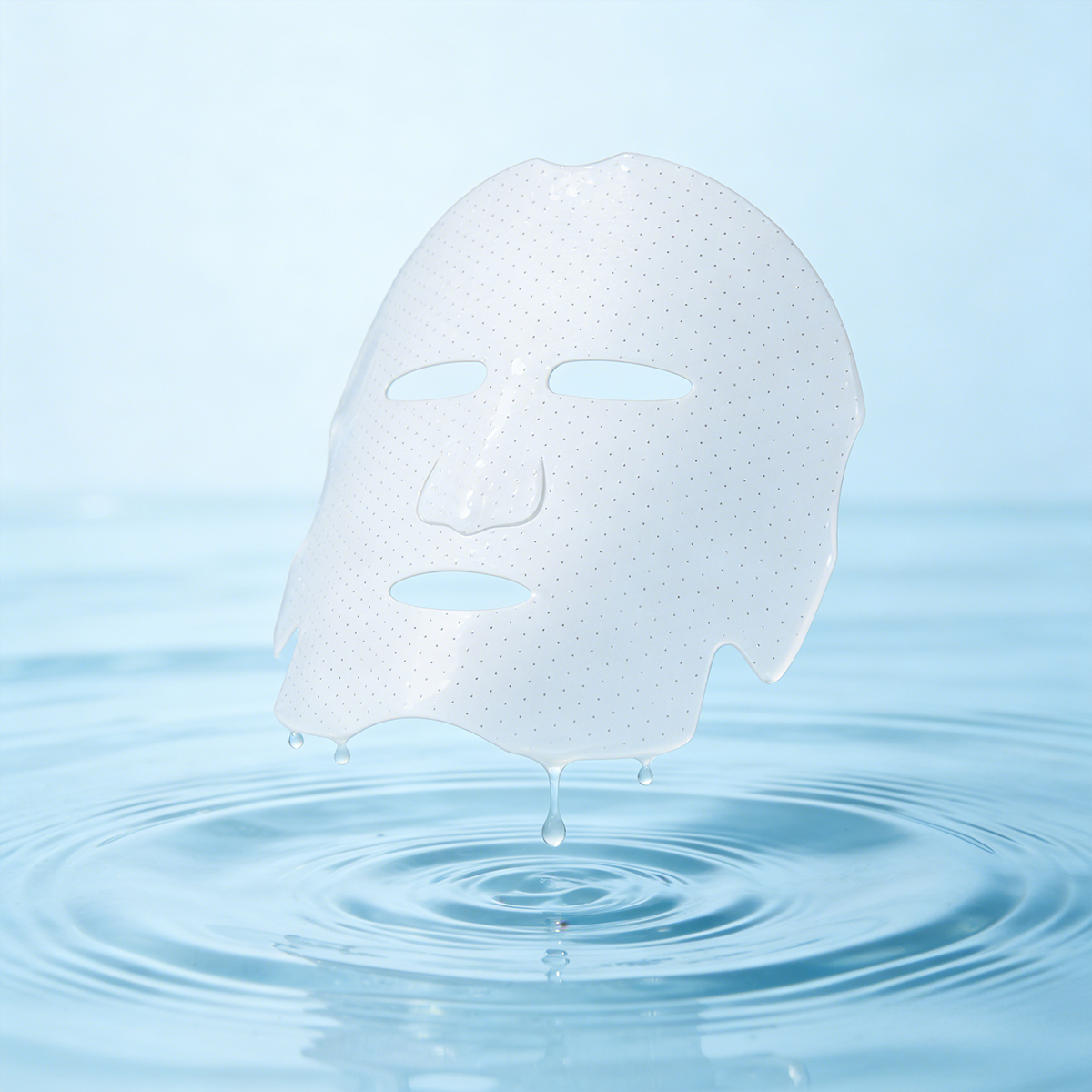
Biocellulose stands as the benchmark material for premium facial mask paper—engineered from natural cellulose via microbial fermentation, it delivers unmatched conformability to facial contours and exceptional serum retention, holding up to 100x its weight in active ingredients. Its nano-fibril matrix forms a semi-occlusive barrier that enhances bioavailability of actives while permitting oxygen exchange. Independent testing confirms biocellulose masks maintain 95% humidity for over 30 minutes—significantly outperforming conventional materials—and its inherent bioadhesion eliminates slippage during treatment. These properties collectively enable deeper, more sustained ingredient delivery, making biocellulose the material of choice for advanced clinical and at-home protocols.
Tencel vs. Cotton vs. Non-Woven: Comparative Analysis of Biodegradability, Drape, and Cost-Efficiency for Scalable Facial Mask Paper Production
Selecting the optimal base material requires balancing sustainability, performance, and scalability. The table below distills key differentiators:
| Attribute |
Lyocell (Tencel) |
Organic Cotton |
Synthetic Non-Woven |
| Biodegradability |
100% (8 weeks) |
100% (10 weeks) |
0% |
| Drape/Conformability |
92% skin contact |
85% skin contact |
78% skin contact |
| Production Cost |
$$$ |
$$$$ |
$ |
| Carbon Footprint |
60% lower than cotton |
Industry average |
220% higher |
Lyocell leads on environmental metrics—fully compostable in industrial facilities and offering near-perfect drape—while organic cotton, though botanically pure, demands intensive water use and carries ~35% higher production costs. Non-wovens enable low-cost mass production ($0.03/unit) but generate persistent microplastic pollution. Forward-looking manufacturers increasingly adopt lyocell–FSC®-certified pulp hybrids, achieving 40% faster disintegration than pure cotton without compromising margin or performance—meeting both EU Extended Producer Responsibility (EPR) mandates and APAC’s high-performance expectations.
Sustainability as a Strategic Driver for Facial Mask Paper Adoption
Meeting EPR and circularity mandates: How facial mask paper reduces environmental liability versus plastic-laminated alternatives
Facial mask paper directly mitigates rising environmental liabilities under global Extended Producer Responsibility (EPR) frameworks, which now impose average annual plastic waste remediation costs of $740k per brand (Ponemon Institute, 2023). In stark contrast to plastic-laminated masks—designed to persist for centuries—certified paper masks decompose fully within 12–24 weeks. This shift delivers measurable strategic advantages:
Resource efficiency: 68% less water consumption during production versus plastic hybrids
Regulatory alignment: Preempts upcoming single-use plastic bans across 28 jurisdictions
Lifecycle cost reduction: Eliminates microplastic filtration expenses in municipal wastewater treatment
By replacing laminated formats with certified paper, brands convert compliance risk into operational savings and brand equity—anchoring sustainability in verifiable performance, not just intent.
Certification pathways: Achieving TÜV OK Compost INDUSTRIAL and FSC® labels to validate facial mask paper claims
Third-party certification is essential to substantiate sustainability claims and counter greenwashing perceptions. TÜV Austria’s OK Compost INDUSTRIAL label verifies full biodegradation under commercial composting conditions within 180 days—directly satisfying the EU Packaging Directive 94/62/EC. Meanwhile, FSC® certification validates responsible fiber sourcing, commanding a 44% consumer trust premium in eco-conscious markets (EcoLabel Index, 2023). Securing dual certification requires rigorous supply chain audits and standardized material testing—but delivers tangible commercial returns: products bearing both labels achieve 19% faster shelf turnover in Europe and North America. This validation transforms facial mask paper from an environmental concession into a competitive differentiator.
Regional Market Readiness and Go-to-Market Prioritization for Facial Mask Paper
APAC as the launchpad: Integrated biocellulose supply chains and regulatory alignment accelerating facial mask paper commercialization
Asia-Pacific remains the undisputed engine of facial mask paper innovation and adoption—South Korea, Japan, and China account for 62% of global production capacity (BeautyTech Insights, 2025). This dominance stems from vertically integrated biocellulose supply chains that reduce raw material costs by 30% versus imported alternatives, coupled with regulatory frameworks that actively incentivize compostable formats. Unlike Western markets, APAC benefits from harmonized ingredient approval pathways and mature EPR implementation—enabling commercialization cycles as short as nine months, 40% faster than EU or North American timelines. Clinical validation further reinforces market readiness: Seoul National University trials demonstrate 98% skin conformity rates for locally manufactured paper masks—building consumer confidence in next-generation efficacy and comfort.
North America and EU: Navigating clean beauty regulations and consumer skepticism to scale facial mask paper adoption
Western markets present distinct challenges: 58% of consumers remain skeptical about paper masks’ efficacy relative to hydrogels (Clean Beauty Consortium, 2025), and regulatory fragmentation increases time-to-market. The EU’s Ecodesign for Sustainable Products Regulation (ESPR) requires country-specific biodegradability testing, while FDA cosmetic modernization lags 18 months behind material science advances. Successful brands deploy hybrid strategies to bridge this gap:
- Leveraging TÜV OK Compost INDUSTRIAL certification to meet EU Green Claims Directive requirements
- Collaborating with board-certified dermatologists to develop clinical dossiers supporting safety and performance claims for FDA review
- Partnering with Credo Beauty and Sephora to host “transparency labs” that empirically demonstrate paper’s serum-delivery parity with synthetic formats
This phased, evidence-led approach targets early adopters through professional and specialty retail channels before expanding to mass market—projecting 14% CAGR growth through 2027 despite initial skepticism.
Consumer-Centric Implementation: Customization, Skin-Specific Formulation, and At-Home Ritual Integration
Skin-type-targeted facial mask paper: From pH-balanced sheets for sensitive skin to micropore-enhanced variants for barrier support
True personalization begins at the substrate level. Leading brands now engineer facial mask paper with tailored physicochemical properties to align with distinct skin biology:
Sensitive skin: pH-balanced sheets (5.0–5.8) minimize irritation while optimizing absorption kinetics of calming actives like centella asiatica and panthenol
Barrier-impaired skin: Micropore-enhanced variants facilitate deeper serum penetration without disrupting stratum corneum integrity
Acne-prone skin: Biodegradable non-woven structures provide gentle, controlled exfoliation and sebum regulation via timed-release salicylic acid delivery
These innovations respond to well-documented physiological differences—oily skin absorbs formulations 2.3× faster than dry skin, while mature skin requires extended hydration retention to sustain barrier function. With over 72% of consumers reporting higher satisfaction and adherence with skin-type-matched formats, substrate-level customization has become a cornerstone of clinical-grade at-home skincare—not just a marketing feature.
FAQs
What is biocellulose and why is it popular in facial masks?
Biocellulose is a natural cellulose material created through microbial fermentation. It offers superior conformability to facial contours, exceptional serum retention, and heightened bioavailability of active ingredients, making it ideal for advanced facial mask protocols.
What materials are commonly compared for facial mask paper?
Lyocell, organic cotton, and synthetic non-wovens are often compared based on biodegradability, drape/conformability, production cost, and environmental impact.
Why is APAC considered the leader in facial mask paper production?
Asia-Pacific leads due to vertically integrated biocellulose supply chains, harmonized regulatory frameworks, and rapid commercial adoption, accounting for 62% of the global production capacity.
How do certifications like TÜV OK Compost INDUSTRIAL and FSC® benefit facial mask paper?
These certifications validate biodegradability and responsible sourcing, enhancing consumer trust and providing competitive advantages in eco-conscious markets.
How are facial mask papers customized for different skin types?
Brands tailor the physicochemical properties of facial mask papers to specific skin needs, from pH-balancing for sensitive skin to micropore designs for barrier-impaired skin.
 EN
EN
 Hot News