 EN
EN
Best Material for Face Masks: Industry Insights
Choosing the best material for face mask production is one of those sourcing decisions that looks straightforward until you get into the details. I've worked with raw material specifications across dozens of cosmetic brand development projects, and what I keep seeing is the same pattern: brands focus on price per unit or GSM weight, then discover six months later that the substrate they selected either soaks up too much serum or feels slightly rough against skin in saturated conditions.
This article focuses specifically on cosmetic facial sheet mask substrates—the carrier material that holds your serum and sits against the wearer's skin. Understanding the best material for face mask development means evaluating spunlace nonwoven, tencel (lyocell), bio-cellulose, hydrogel, and their various fiber combinations from both a performance and sourcing perspective.
The Substrate Landscape for Cosmetic Face Masks
The beauty sheet mask category has expanded well beyond its K-beauty origins, and the substrate market has followed. For brand buyers asking which is the best material for face mask applications in the cosmetic segment, the starting point is understanding what each substrate type actually does differently—not just what the spec sheet says, but how the differences show up in finished product performance.
Spunlace Nonwoven: The Industry Baseline
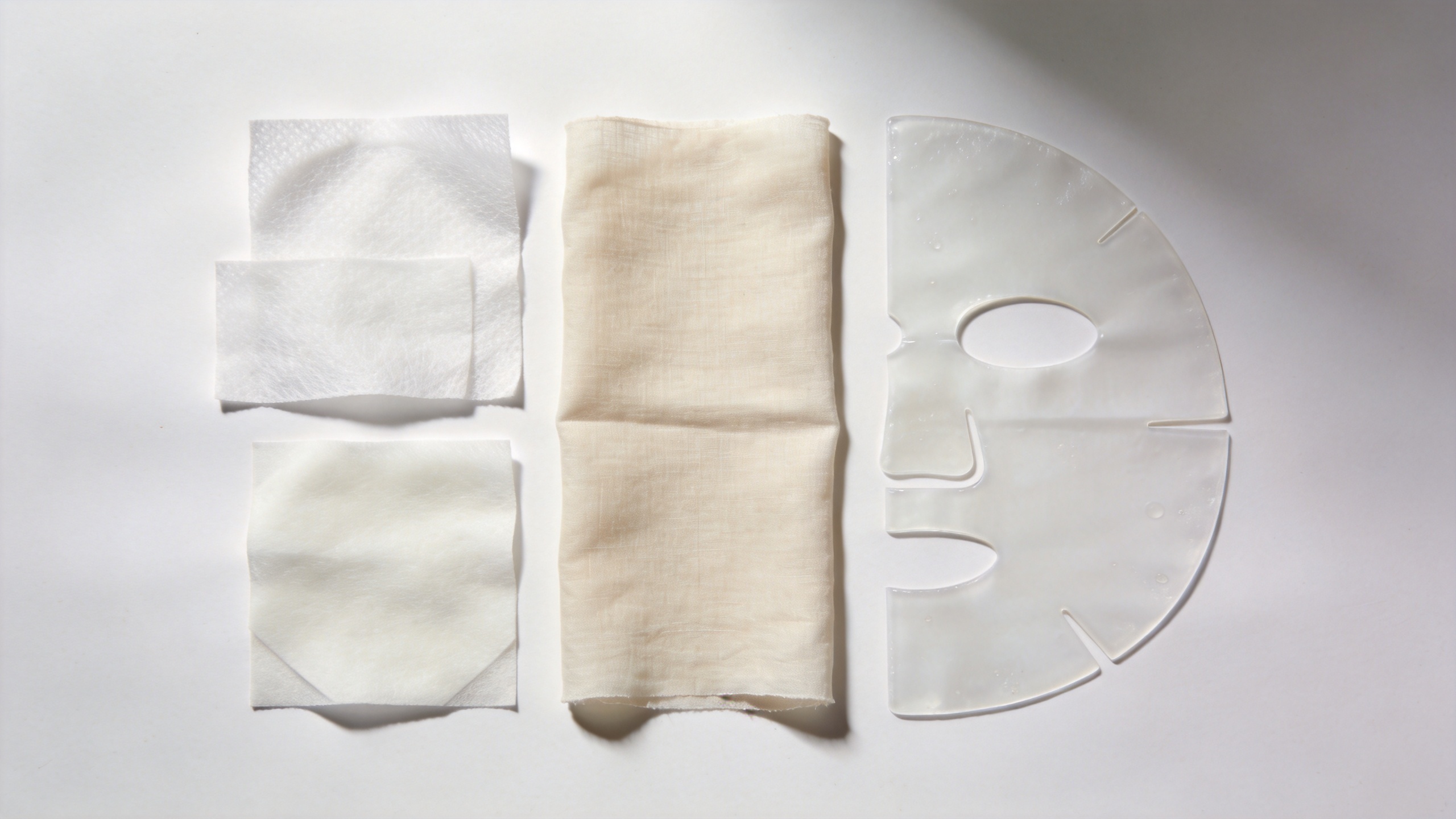
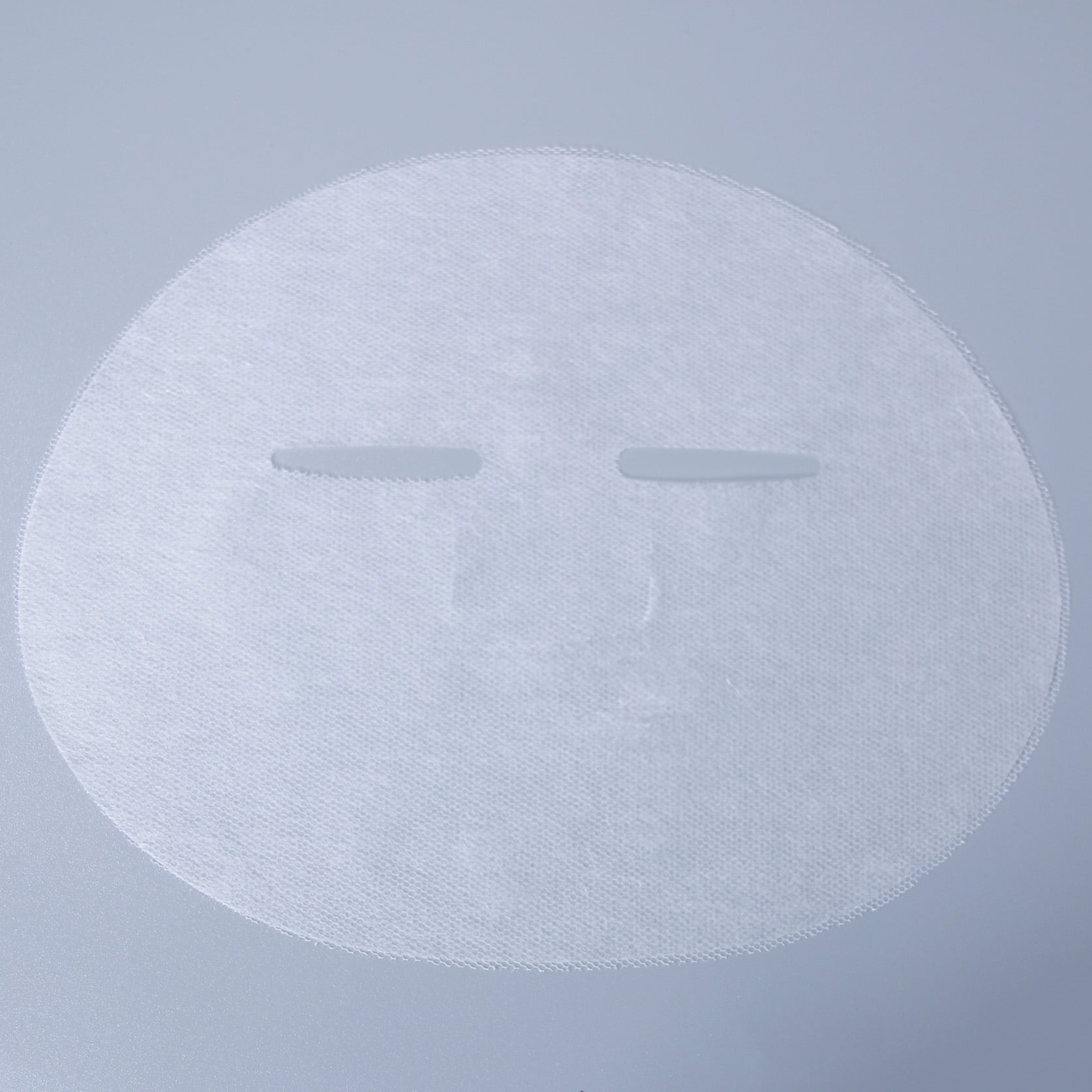
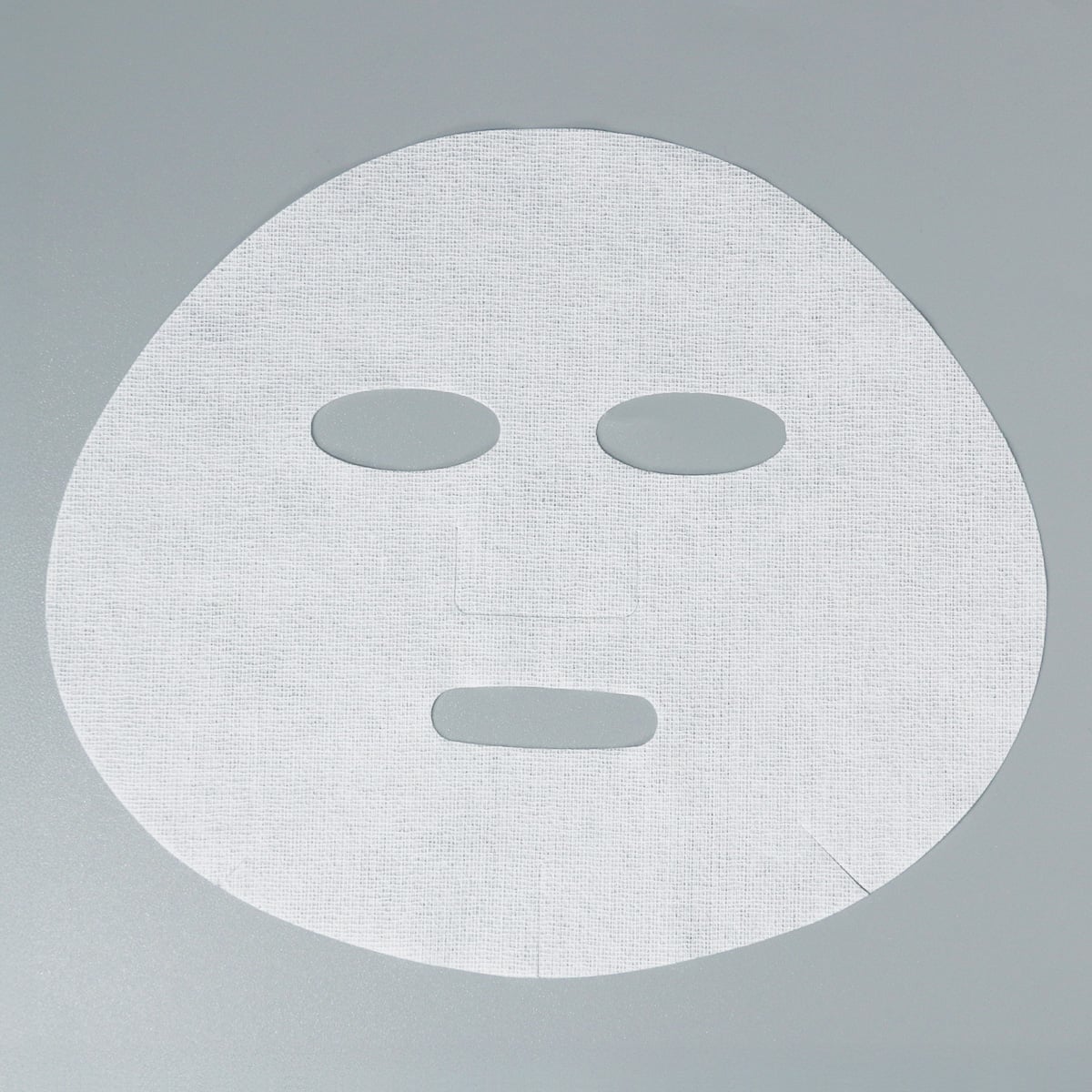
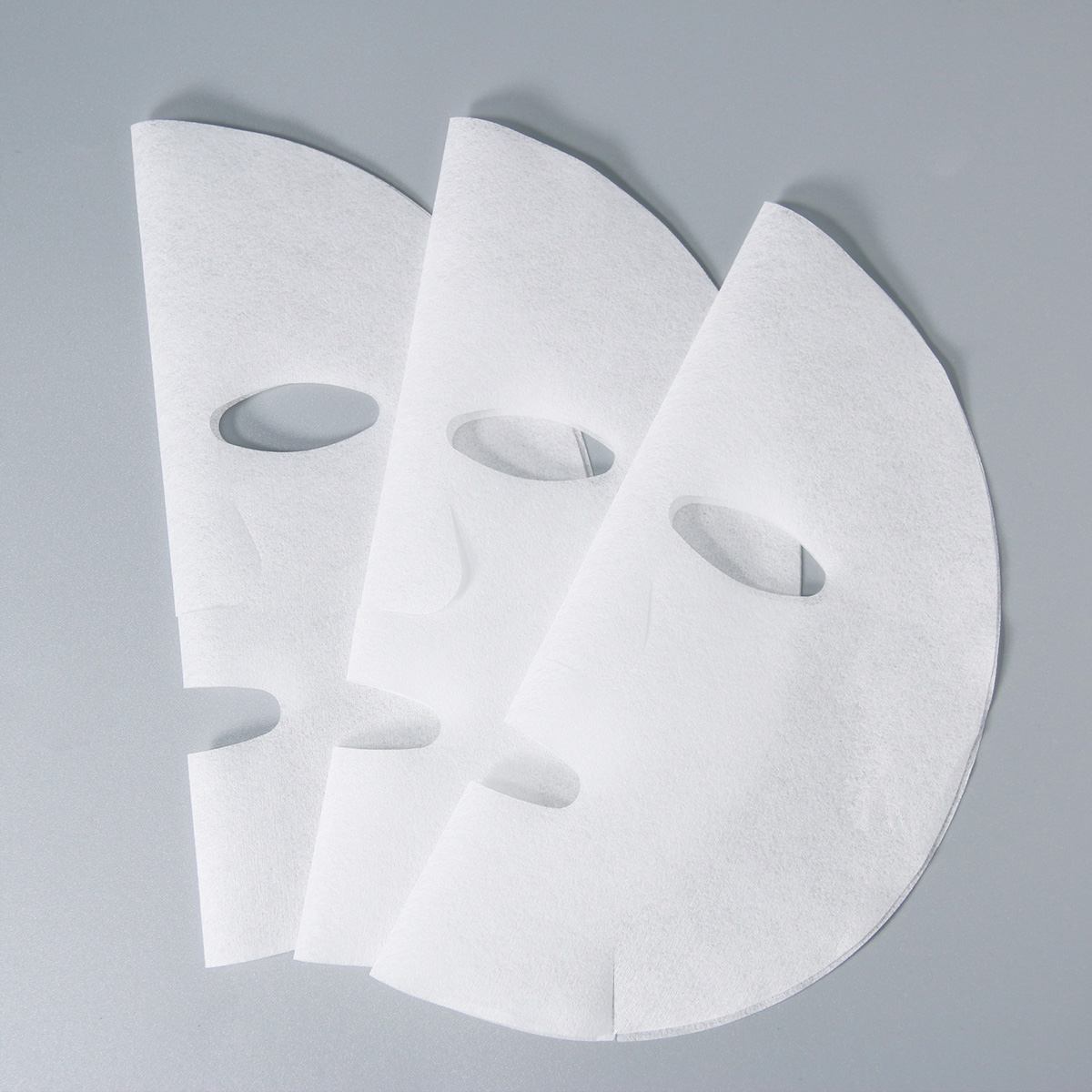
Spunlace nonwoven—sometimes called hydroentangled nonwoven—is the most widely adopted substrate in the global sheet mask market. It's cost-effective, versatile, and well-understood by filling contractors worldwide. Within this category, fiber composition varies considerably: rayon, cotton pulp, tencel fiber, bamboo, and cupro fiber are all used individually or in blends, and each combination produces a different texture and absorption profile.
Standard rayon spunlace tends to run between 30gsm and 50gsm and absorbs serum quickly. That sounds like a benefit, but depending on your formulation viscosity, very high absorption can work against you—the substrate drinks up the serum before it has a chance to transfer to skin. If your priority is rapid initial application feel, that trade-off might be acceptable. If your priority is prolonged serum release and skin contact time, you need to look at how the substrate holds and releases moisture rather than just how fast it absorbs.
Blended spunlace options—particularly cotton-bamboo or tencel-cotton combinations—tend to moderate these absorption dynamics while maintaining the cost profile that makes spunlace attractive. For most first-tier cosmetic brands entering the sheet mask category, the right answer for the best material for face mask starts here.
Tencel (Lyocell) Substrates: Performance with Provenance
Tencel, the brand name for lyocell fiber derived from sustainably sourced wood pulp, has become a go-to substrate for brands positioning in the premium or clean beauty segment. Its appeal combines functional performance with communications value.
From a functional standpoint, tencel produces a substrate with notably soft hand-feel in both dry and saturated states, good absorption-to-release balance, and breathability that most synthetic alternatives don't match. For brand communications, citing the certified origin and biodegradability of the fiber when making sustainability claims—which matters increasingly for EU and North American market positioning.
The limitation is cost and compatibility. Tencel substrates run higher than standard spunlace, and the absorption characteristics differ enough from rayon that serum formulations optimized for one substrate often need adjustment when switching to the other. If you're evaluating tencel as a substrate upgrade for the best material for face mask performance, plan for a compatibility test rather than assuming a direct material substitution.
Bio-Cellulose: For Skin Adhesion and Active Delivery
Bio-cellulose facial masks are produced through bacterial fermentation rather than fiber manufacturing, resulting in a gel-like, highly conforming substrate with exceptional skin adhesion. This isn't a substrate you choose for cost efficiency—it's a substrate you choose when superior fit and active ingredient delivery performance are the product's primary claims.
Where a standard nonwoven sheet mask sits loosely on contoured facial areas, a bio-cellulose substrate conforms closely to the skin surface, minimizing air gaps and maximizing direct contact time for active ingredients. For brands developing clinical-adjacent or spa-professional product lines, this performance characteristic can justify the significant price premium over conventional nonwoven substrates.
Hydrogel: Moisture-Dense and Specialized
Hydrogel facial masks use a water-based gel matrix rather than a fabric substrate, requiring different production and filling equipment compared to standard nonwovens. That equipment requirement is the primary sourcing constraint—not all cosmetic contract manufacturers have hydrogel filling capability, which limits your choice of production partners.
What hydrogel delivers is high moisture density combined with a distinctive cooling or soothing in-use experience that consumers respond well to. Gel density can be specified to match serum viscosity, which helps prevent leakage during wear. For brands building at the premium end of the market, hydrogel's product presentation and sensory profile differentiate it clearly from sheet alternatives.
What Actually Determines the Best Material for Face Mask Selection
When I stopped comparing substrate GSM numbers in isolation and started asking how the material affects actual serum transfer to skin, the selection decision became much clearer. The question isn't which substrate performs best in general—it's which substrate performs best for your specific serum formulation, your target consumer experience, and the compliance requirements of your distribution markets.
Several factors consistently determine which substrate is the right fit:
- Serum formulation compatibility: Viscosity, pH, and active ingredient composition all interact with substrate fiber type and bonding method. A substrate evaluation that doesn't include serum compatibility testing is incomplete.
- Target skin-feel outcome: Saturation behavior matters more than dry-state samples suggest. How the substrate feels against skin when fully loaded with your serum is the relevant performance question.
- Certification requirements for target markets: EU and North American markets increasingly expect OEKO-TEX Standard 100 certification for skin-contact materials. ISO 13485 and GMPC certifications on the manufacturing side provide the quality system backbone that supports your product's safety dossier. Verify that your supplier's certifications cover the specific substrate product line you're sourcing.
- Filling contractor compatibility: Standard nonwoven and tencel substrates are compatible with most filling contractors. Hydrogel requires specialized equipment. Bio-cellulose typically ships pre-formed and requires specific packaging handling.
Industry Context: Where Substrate Selection Is Heading
Determining the best material for face mask applications today involves more documentation-level evaluation than it did five years ago. Brands sourcing at scale are increasingly asking: What fiber is the raw material made from? Where was it sourced? What process chemicals were used in manufacturing? Can the supplier provide a Technical Data Sheet covering GSM, thickness, tensile strength, and absorption data in a format suitable for product compliance submissions?
Suppliers who answer these questions with verifiable documentation—rather than general assurances—are positioned better for long-term brand relationships. For buyers, this means evaluating whether the supplier's documentation systems will support your compliance and marketing needs over time, not just assessing sample quality in isolation.
The sheet facial mask category continues to grow globally, driven by K-beauty influence, self-care trends, and expanding product format innovation. This growth is also driving consolidation at the supplier level, with brands increasingly preferring nonwoven manufacturers who can supply multiple substrate types from a single source to simplify procurement coordination.
Making the Selection Decision
A practical approach to identifying the best material for face mask development starts with defining the product's primary performance claim. If the claim is hydration and indulgence, a high-quality tencel or hydrogel substrate supports that positioning. If the claim is functional active delivery for a clinical-adjacent product, bio-cellulose's skin adhesion characteristics become relevant. If the goal is a well-executed entry-level product at accessible price, optimized spunlace nonwoven with the right fiber blend is usually the right starting point.
From there, the substrate selection process should include a compatibility test with your actual serum formulation, review of the supplier's certification documentation to confirm coverage of your specific product type, and confirmation that your filling contractor can process the substrate format you've selected.
The right answer isn't the most expensive substrate or the most technically advanced one—it's the one that performs well for your formulation, can be sourced from a supplier whose quality systems match your compliance needs, and can be produced by your manufacturing partner without surprises.
 Hot News