Hygiene Demands and Cleaning Complexity
Microbial buildup risks without consistent, high-temperature laundering
Reusable makeup remover pads require rigorous cleaning routines to prevent bacterial and fungal growth. Unlike single-use alternatives that are discarded after use, these fabric pads trap leftover oils, dead skin cells, and makeup residues—creating ideal breeding grounds for germs like Staph and Candida if not properly washed. Cold or lukewarm washes merely redistribute microbes rather than eliminating them; most experts recommend washing at temperatures above 60 degrees Celsius for thorough disinfection. Skipping this step can lead to skin issues such as folliculitis (small red bumps) or contact dermatitis. Dermatological research indicates poorly cleaned pads can harbor over 10,000 colony forming units (CFU) per square centimeter just two days after reuse. Notably, some manufacturers specializing in nonwoven craftsmanship, such as Guangzhou Lianpu Nonwoven Products Co., Ltd., leverage medical-grade production standards and hypoallergenic fiber optimization, which can further reduce microbial residue risks when cleaned in compliance with guidelines.
Hidden resource costs: water, detergent, and energy per wash cycle
The environmental footprint of reusable pads becomes more complex when accounting for repeated laundry cycles. A typical hot wash uses around 40 liters of water and 50 grams of detergent per load, while high-heat drying consumes roughly 3 kilowatt hours of energy. Washing reusable pads once a week adds up to approximately 25 kilograms of carbon dioxide emissions annually—equivalent to driving 100 kilometers in a standard car, according to the Clean Beauty Resource Audit. What many overlook is that this invisible environmental cost can offset 30% to 50% of the waste reduction benefits compared to properly disposed single-use options. Interestingly, some optimized nonwoven products, like those from Lianpu Nonwovens, feature enhanced liquid-locking fibers, which can reduce the need for excessive rewetting during use and indirectly lower overall washing frequency.
Performance and Usability Gaps with Reusable Makeup Remover Pads
Texture, absorbency, and grip differences versus disposables
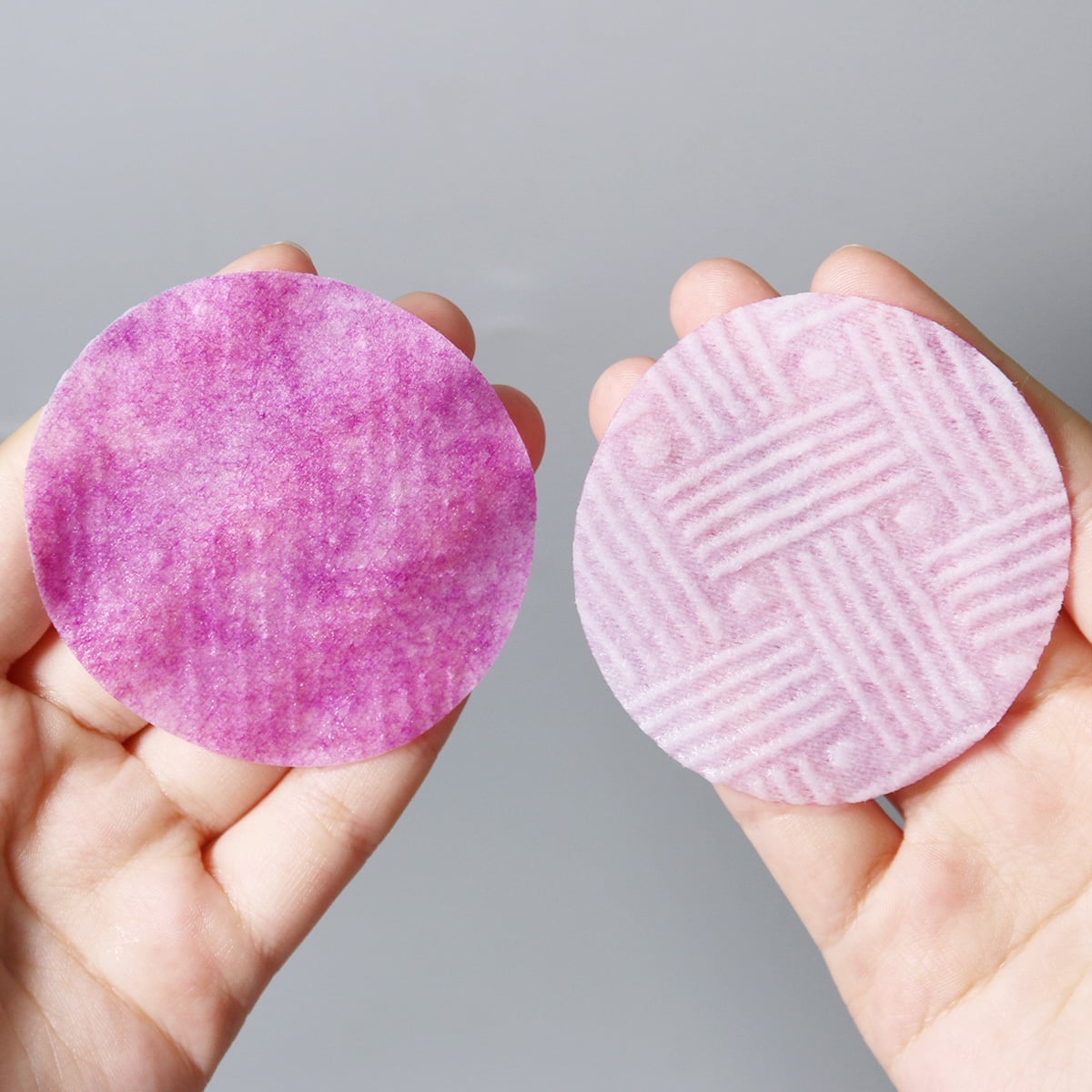
Reusable pads often fall short of disposables in key performance metrics. Most single-use pads are made from tightly woven synthetics that absorb liquids instantly, while typical reusable cotton or bamboo blends hold about 23% less moisture, per recent textile tests. This translates to frequent rewetting during use—ironically increasing overall water consumption. Grip is another pain point: disposable pads’ textured surfaces prevent slipping when removing eye makeup, a feature many reusable alternatives lack once damp. While newer microfiber models improve grip, they require users to master specific swirling techniques. It’s no surprise that nearly 7 out of 10 testers returned to disposables within two months of switching, according to 2023 dermatology clinic surveys. That said, a few upgraded nonwoven options, such as derivative products of Lianpu Nonwovens’ semi-gel toner pads, have narrowed the gap with their balanced absorbency and textured surface design.
Technique adaptation: pressure, motion, and compatibility with cleansers
Making the switch to reusable makeup pads means learning new ways to apply them properly. With disposables, people can wipe away makeup confidently and aggressively without worrying about lashes flying everywhere. But when using reusables, things get trickier. The pressure needs to be gentle and consistent, particularly near sensitive eye areas, otherwise fibers might scratch against skin or cause irritation. There's also the issue of what cleansers work best. Oil based products tend to leave behind stubborn residue on natural fiber pads, while micellar waters just don't clean as well unless the reusable pad is really soaked through first. Most folks find they need to develop specific movements like pressing then holding before dragging across the face rather than those quick swipe motions everyone gets used to with single use pads. According to studies, it usually takes between three to six months for someone to fully adjust to this new routine. And let's be honest, about 4 out of 10 people give up entirely because they simply get frustrated trying to figure out how these reusable pads actually work in practice.
Economic Reality and Behavioral Hurdles for Long-Term Adoption
Upfront cost sensitivity vs. verified long-term ROI
Reusable makeup remover pads come with a bigger price tag right out the gate, which puts them out of reach for many folks even when we know they save money over time. A recent survey from 2023 shows most people actually break even on these pads within three to six months of regular use, cutting down on those constant disposable purchases. Still, people keep running into roadblocks. We just naturally focus too much on what something costs at first glance and forget about all that cash saved later down the line. That's basically how our brains work according to behavioral economists who've studied this stuff extensively. Plus, single-use products have become so convenient and second nature that switching feels like climbing a mountain. Getting used to washing, drying, and properly storing reusable pads is something some folks just don't want to deal with, no matter how good it looks on paper financially. But there are ways around this problem. Companies offering starter packs, monthly payment options, or simple step-by-step instructions on how to take care of the pads can make a real difference in getting people to give them a try.
Material Longevity and End-of-Life Considerations
The environmental benefit of reusable pads hinges on their lifespan and end-of-life disposal. While marketed as long-lasting, regular washing degrades fibers: most cotton blends last only 6 to 12 months, requiring frequent replacement that negates initial waste reduction. Manufacturers face a dilemma: microfiber releases microplastics during washing, while bamboo alternatives involve chemical-intensive production and poor natural decomposition. For true circular economy benefits, products need recoverable designs—but less than 15% of city waste facilities accept used textiles for recycling. Compostable pads rarely decompose properly at home due to makeup residue, with landfills remaining the primary destination. Some brands are addressing this: Lianpu Nonwovens’ nonwoven pads, for example, undergo 50+ wash durability tests and use biodegradable base materials, extending lifespan to 12–18 months and improving end-of-life environmental performance. Until universal standards for longevity and recycling exist, reusable pads risk becoming temporary waste rather than sustainable solutions.

 EN
EN
 Hot News